Injuries
Personal Injury Statute of Limitations by State: How Long You Have to File
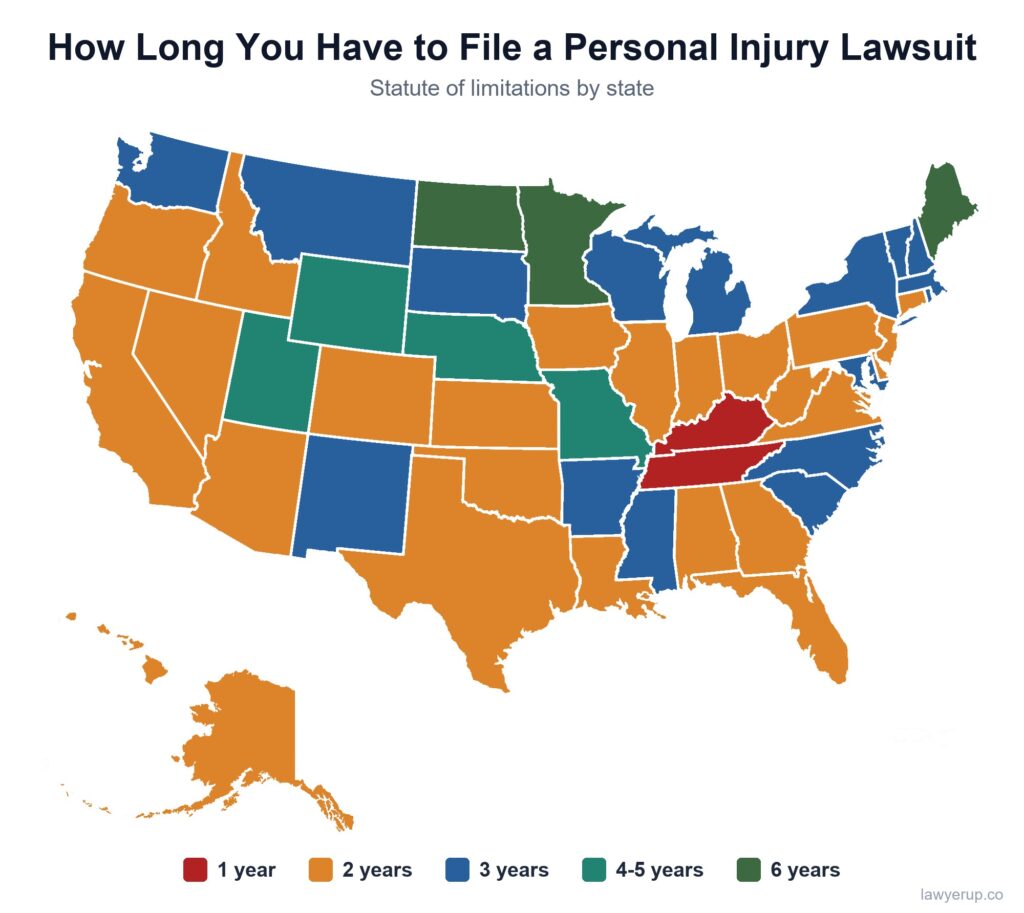
Every state sets a deadline for filing a personal injury lawsuit, and in most states it falls between one and three years after the injury. Miss it, and a court will usually throw out your case, no matter how strong it is. This guide lists the personal injury statute of limitations in every state and explains the exceptions that can shorten or extend it.
What a statute of limitations is
A statute of limitations is the legal deadline for filing a lawsuit. For most injury claims, the clock starts on the day of the accident or injury.
The deadline applies to filing the lawsuit in court, not to calling a lawyer or opening an insurance claim. Talking with an insurance company does not pause the clock, even if settlement talks are going well.
Many cases settle without a lawsuit ever being filed. But if you miss the deadline, you lose the option to sue, and insurance companies know it.
Personal injury statute of limitations by state
Most states give you 2 years. Kentucky and Tennessee have the shortest deadline at 1 year, while Maine and North Dakota allow 6 years, as does Minnesota for most negligence claims.
| State | Deadline to file | Statute | Notes |
|---|---|---|---|
| Alabama | 2 years | Ala. Code § 6-2-38 | |
| Alaska | 2 years | Alaska Stat. § 09.10.070 | |
| Arizona | 2 years | Ariz. Rev. Stat. § 12-542 | |
| Arkansas | 3 years | Ark. Code § 16-56-105 | |
| California | 2 years | Cal. Civ. Proc. Code § 335.1 | |
| Colorado | 2 years | Colo. Rev. Stat. § 13-80-102 | 3 years for motor vehicle accidents |
| Connecticut | 2 years | Conn. Gen. Stat. § 52-584 | |
| Delaware | 2 years | Del. Code tit. 10, § 8119 | |
| District of Columbia | 3 years | D.C. Code § 12-301 | |
| Florida | 2 years | Fla. Stat. § 95.11 | Cut from 4 years to 2 in March 2023; older claims may still fall under the 4-year rule |
| Georgia | 2 years | Ga. Code § 9-3-33 | |
| Hawaii | 2 years | Haw. Rev. Stat. § 657-7 | |
| Idaho | 2 years | Idaho Code § 5-219 | |
| Illinois | 2 years | 735 ILCS 5/13-202 | |
| Indiana | 2 years | Ind. Code § 34-11-2-4 | |
| Iowa | 2 years | Iowa Code § 614.1 | |
| Kansas | 2 years | Kan. Stat. § 60-513 | |
| Kentucky | 1 year | Ky. Rev. Stat. § 413.140 | 2 years for motor vehicle accidents |
| Louisiana | 2 years | La. Civ. Code arts. 3493.11, 3493.12 | 1 year for injuries before July 1, 2024 |
| Maine | 6 years | Me. Rev. Stat. tit. 14, § 752 | |
| Maryland | 3 years | Md. Cts. & Jud. Proc. § 5-101 | |
| Massachusetts | 3 years | Mass. Gen. Laws ch. 260, § 2A | |
| Michigan | 3 years | Mich. Comp. Laws § 600.5805 | |
| Minnesota | 6 years | Minn. Stat. § 541.05 | 6 years for negligence; 2 years for intentional acts (§ 541.07) |
| Mississippi | 3 years | Miss. Code § 15-1-49 | |
| Missouri | 5 years | Mo. Rev. Stat. § 516.120 | |
| Montana | 3 years | Mont. Code § 27-2-204 | |
| Nebraska | 4 years | Neb. Rev. Stat. § 25-207 | |
| Nevada | 2 years | Nev. Rev. Stat. § 11.190 | |
| New Hampshire | 3 years | N.H. Rev. Stat. § 508:4 | |
| New Jersey | 2 years | N.J. Stat. § 2A:14-2 | |
| New Mexico | 3 years | N.M. Stat. § 37-1-8 | |
| New York | 3 years | N.Y. C.P.L.R. § 214 | |
| North Carolina | 3 years | N.C. Gen. Stat. § 1-52 | |
| North Dakota | 6 years | N.D. Cent. Code § 28-01-16 | |
| Ohio | 2 years | Ohio Rev. Code § 2305.10 | |
| Oklahoma | 2 years | Okla. Stat. tit. 12, § 95 | |
| Oregon | 2 years | Or. Rev. Stat. § 12.110 | |
| Pennsylvania | 2 years | 42 Pa. Cons. Stat. § 5524 | |
| Rhode Island | 3 years | R.I. Gen. Laws § 9-1-14 | |
| South Carolina | 3 years | S.C. Code § 15-3-530 | |
| South Dakota | 3 years | S.D. Codified Laws § 15-2-14 | |
| Tennessee | 1 year | Tenn. Code § 28-3-104 | |
| Texas | 2 years | Tex. Civ. Prac. & Rem. Code § 16.003 | |
| Utah | 4 years | Utah Code § 78B-2-307 | |
| Vermont | 3 years | Vt. Stat. tit. 12, § 512 | |
| Virginia | 2 years | Va. Code § 8.01-243 | |
| Washington | 3 years | Wash. Rev. Code § 4.16.080 | |
| West Virginia | 2 years | W. Va. Code § 55-2-12 | |
| Wisconsin | 3 years | Wis. Stat. § 893.54 | |
| Wyoming | 4 years | Wyo. Stat. § 1-3-105 |
How long after an accident can you sue?
In most states, two years from the date of the accident. The table above gives the exact figure for your state, but three things decide your real deadline:
- Where the accident happened, not where you live. A Tennessee crash follows Tennessee’s one-year deadline even if you live in Virginia.
- What kind of claim it is. The statute of limitations for a car accident can differ from the general injury deadline in the same state — Kentucky allows one year for most injuries but two for motor vehicle accidents, and Colorado runs the other way at two years generally and three for motor vehicle claims.
- Who you are suing. Claims against a government body often require formal notice within months.
Because the answer turns on those details, treat the number in the table as the outer limit rather than a target.
Exceptions that can change your deadline
The deadlines above are the general rule. Several common exceptions can give you more time, or much less.
- Injuries discovered later. Many states start the clock when you discovered the injury, or reasonably should have, rather than the day it happened. This often applies to medical malpractice and toxic exposure.
- Injured children. In many states, the clock pauses until a child turns 18, though some states set limits for certain claims.
- Claims against the government. If a city, county, state agency, or public transit system is responsible, you may need to file a formal notice within months, sometimes as little as 6 months. In Minnesota, for example, notice is due within 180 days for many government claims.
- Wrongful death. Some states set a separate deadline for wrongful death claims, and the clock usually starts on the date of death rather than the date of injury.
- Medical malpractice. Many states have their own malpractice deadlines, plus an outer limit, called a statute of repose, that can bar a claim even if the injury was discovered late.
How to protect your claim
The safest approach is to treat the deadline as much closer than it looks. Building a strong case takes time, and lawyers need room to investigate before they file.
- Write down the date of your injury and anything that might change the deadline, such as when you first noticed symptoms.
- Find out who may be responsible. If a government agency could be involved, act right away, since notice deadlines can be months, not years.
- Keep records of medical visits, bills, photos, police reports, and insurance letters.
- Talk to a personal injury lawyer early. Most offer free consultations and can tell you the exact deadline for your situation.
- Don’t count on insurance talks to protect you. Negotiating with an insurer does not stop the clock.
Find a lawyer before the clock runs out
If you have been hurt in an accident, the sooner you talk to a lawyer, the more options you will have. An attorney who handles car accident and personal injury cases can confirm the deadline that applies to your claim and what has to happen before it. You can search for personal injury attorneys in your city on Lawyer Up by location and case type, and read reviews from past clients.
Deadlines and statutes are from Thompson Law’s state-by-state table (updated March 2026), with Minnesota corrected per Matthiesen, Wickert & Lehrer, which lists 6 years for negligence under § 541.05 subd. 1(5). Each state’s statute is cited above so you can check the current text yourself. This article is for general information only and is not legal advice. Deadlines change, and the rules for your case may differ based on the facts, the type of claim, and who is involved. Talk with a licensed attorney in your state about your specific deadline. Last checked October 28, 2026.